July 15 AI Operations Brief — Design Trust for Tool Connections, Read Conversational Search’s Next Action, and Prepare for Public Procurement
An operator’s view of coding-agent tool security, NAVER AI Tab’s conversational-search direction, and public AI procurement preparation under the amended AI Framework Act enforcement decree.
DAILY NEWSLETTER · 2026-07-15 · AGENT TOOL SECURITY · AI TAB · AI FRAMEWORK ACT DECREE
July 15 AI Operations Brief — Design Trust for Tool Connections, Read Conversational Search’s Next Action, and Prepare for Public Procurement
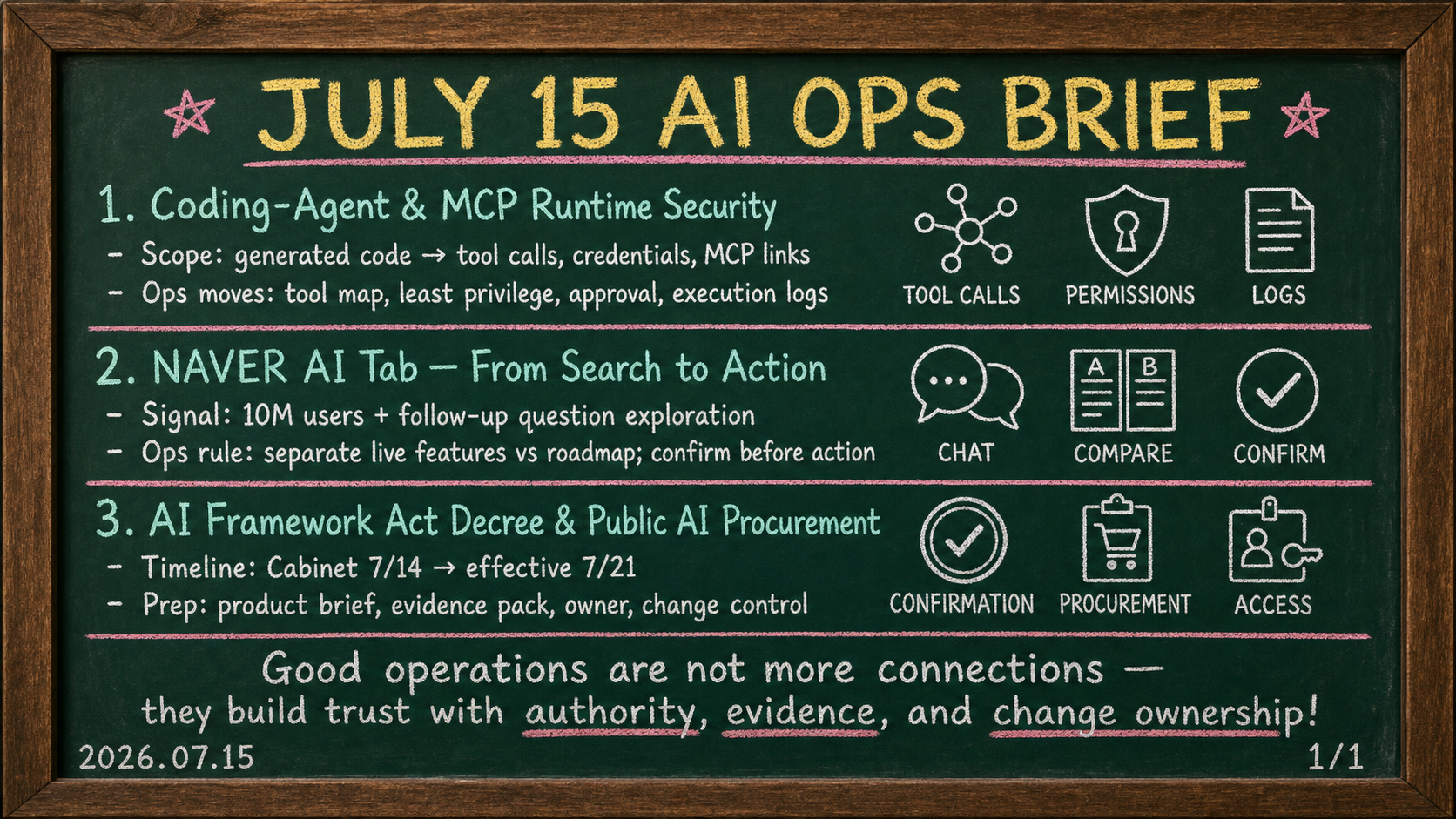
Today’s three signals are less about using more AI than about designing the conditions under which AI connects, guides, and is procured. Coding agents require control over tool calls and credential use beyond generated code. NAVER AI Tab points toward conversational search that helps users take a next action. The amended AI Framework Act enforcement decree, effective next week, brings public AI procurement confirmation and preparation into the operating calendar.
1. Supply-chain security for coding agents asks about execution boundaries before generated code
GTT Korea reports that verification in the development supply chain is expanding beyond code produced by AI and into execution behavior. The operator’s scope now includes an agent’s tool calls, credential use, MCP server connections, and potential policy violations. Risks visible in a code review differ from risks that appear only during execution. Checking whether a dependency changed does not replace checking which tool an agent reached with which authority.
 Source · GTT KoreaAI가 만든 코드 넘어 실행 행위까지 검증...개발 공급망 보안 강화The report covers a widening security scope that includes agent tool calls, credential use, MCP server connections, and policy violations.
The shift means a coding agent can no longer be treated simply as an autocomplete tool. If an agent can read a repository, change files, run tests, and query external services, one natural-language request can lead to several execution stages. That convenience removes repetitive human input, but instructions embedded in a prompt or an untrusted tool description can also alter the action path. The security unit is therefore not only the final code fragment; it is the path from request to tool call.
The official Model Context Protocol architecture documentation describes a tool-connection architecture made of hosts, clients, and servers. Clients in a host connect to individual servers, while servers provide tools and resources. The architecture helps explain how an agent connects to external capabilities and information. It does not make the connection a security guarantee. Which servers are allowed, which tools are exposed, and who may use credentials still require separate host and organizational policies.
 Official documentation · Model Context ProtocolArchitecture overview - Model Context ProtocolThe documentation explains MCP’s basic host, client, and server architecture for reaching tools and resources.
In practice, a connection inventory should not be managed like a product list. For every MCP server and tool, record the work purpose, owner, allowed environment, read or write authority, secret material in use, and whether data leaves the organization. Separate a development server from production credentials, and activate write tools only for work that needs them. When adding a server, inspect not just its feature description but also its inputs, outputs, network destinations, and failure behavior.
Authority should be narrow enough for the agent’s role. An agent that needs document search and code suggestions does not automatically need a deployment key or write access to a customer database. Start by validating its path through read-only work, an isolated test environment, or a constrained sandbox. For actions that are hard to reverse—changes, deployments, or external transfers—use human approval or a separate policy check.
Records also need to move from outcome-centered to execution-centered. A later review needs to know which request called which tool, which server it connected to, which authority applied, and why a policy allowed or blocked the step. This does not mean storing all internal model reasoning. It means retaining the minimum operational evidence needed to reconstruct a path that affected an external system. Sensitive values can remain protected while the system retains references and access history.
This week, choose one coding agent and begin with a tool map. Put connected servers, available tools, execution identity, data scope, write access, and approval points in one table. Any connection that cannot be explained from that table should be disabled or isolated for review. Supply-chain security is not the accumulation of more alerts. It is making the agent’s real execution path clear about what it can and cannot do.
2. NAVER AI Tab’s 10 million users signal conversational search moving toward a next action
News1 reports that NAVER AI Tab has surpassed 10 million users, describing how people continue discovery through follow-up questions and improve search efficiency. The figure indicates that conversational search is taking a place in the discovery process beyond a one-off answer screen. A user can narrow conditions and add context through follow-ups even if the first question is incomplete. User count, however, is not the same measure as the quality of an individual answer or the ability to replace every search task.
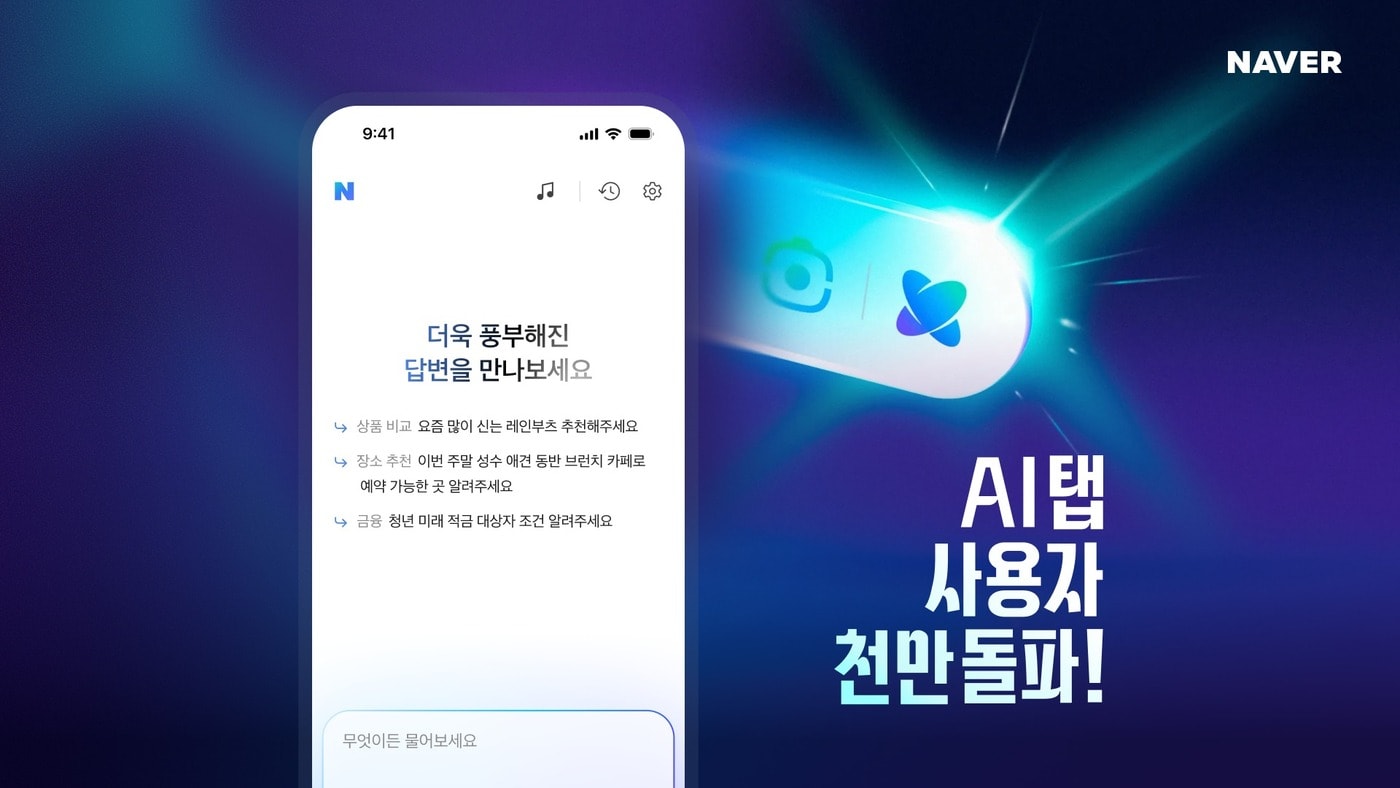 Source · News1네이버, 'AI탭' 사용자 1000만 돌파…“검색 경험 확장”The report covers AI Tab surpassing 10 million users and the role of follow-up questions in discovery and search efficiency.
Follow-up questions move the unit of search from a keyword to a task. Instead of scanning a result list again, a user can ask, “What changes if the budget is lower?” or “Compare these conditions by region,” while carrying forward the prior context. Product teams should not treat this only as a convenience feature. As a conversation gets longer, the service needs to distinguish original information, newly added conditions, system inferences, and gaps that require outside information. The stronger the feeling of remembered context, the more important it is to provide a way to revisit evidence and scope.
NAVER’s official announcement says the formal launch uses a model optimized for action-centered conversational search. It also presents a plan to add real-estate and healthcare agents. This signals a product direction in which search does not stop at organizing information but supports a user’s next step. Announced integrations should not be read as a claim that every action capability is already live. Operators and users need to distinguish current capabilities, guided capabilities, and features announced for later addition.
Official announcement · NAVER네이버, 대화형 검색 'AI탭' 정식 출시… 5,000만 사용자의 일상으로NAVER’s announcement describes a model optimized for action-centered conversational search and a direction to add real-estate and healthcare agents.The value of action-centered search lies in reducing friction between a user and the next screen or choice. Yet in areas such as real estate and health, where personal circumstances and high-stakes judgments meet, a convenient conversation must still preserve the boundary between information and the final decision. Sources, reference dates, applicable locations, and conditions need to remain clear, and uncertainty should not be phrased as settled fact. This is not legal, medical, or investment advice. It is an operating principle that leaves users room to review information in any domain.
A product team can divide the next action in conversation into three stages. First comes finding and summarizing information. Second comes setting comparison criteria and organizing options. Third comes an external state change such as booking, applying, or purchasing. The stages can follow one another in the same interface, but they require different evidence and confirmation steps. As the service moves toward the third stage, users need a clear chance to confirm the target, cost, personal-data sharing, and cancellation conditions.
AI Tab’s user growth indicates that conversational interfaces are entering mainstream search habits. Operating metrics therefore cannot end with click-through rate alone. Teams should also examine whether users obtained more precise conditions after follow-ups, opened cited sources, avoided unwanted actions, and encountered a conversation that did not hide uncertainty. Trust in conversational search comes less from smooth prose than from a user’s sense of control over the decision.
There are four simple standards to check today. An answer should separate verifiable information from a model suggestion. A user should be able to revise or remove earlier conditions. A screen that leads to action should reconfirm the target and cost. The product should also avoid blending an announcement’s direction with the actual scope of the live service. These standards apply to AI Tab and to any conversational-search product.
A team operating conversational search should design an editable discovery process rather than optimize for one good answer. When a user changes a condition, the service should show which prior assumptions remain and should guide the user to search again or narrow the scope where no source is available. That process prevents the convenience of follow-up questions from becoming unverifiable personalization or excessive confidence. Making discovery faster and making the decision for the user are different tasks.
3. The amended AI Framework Act enforcement decree puts public AI procurement confirmation onto next week’s schedule
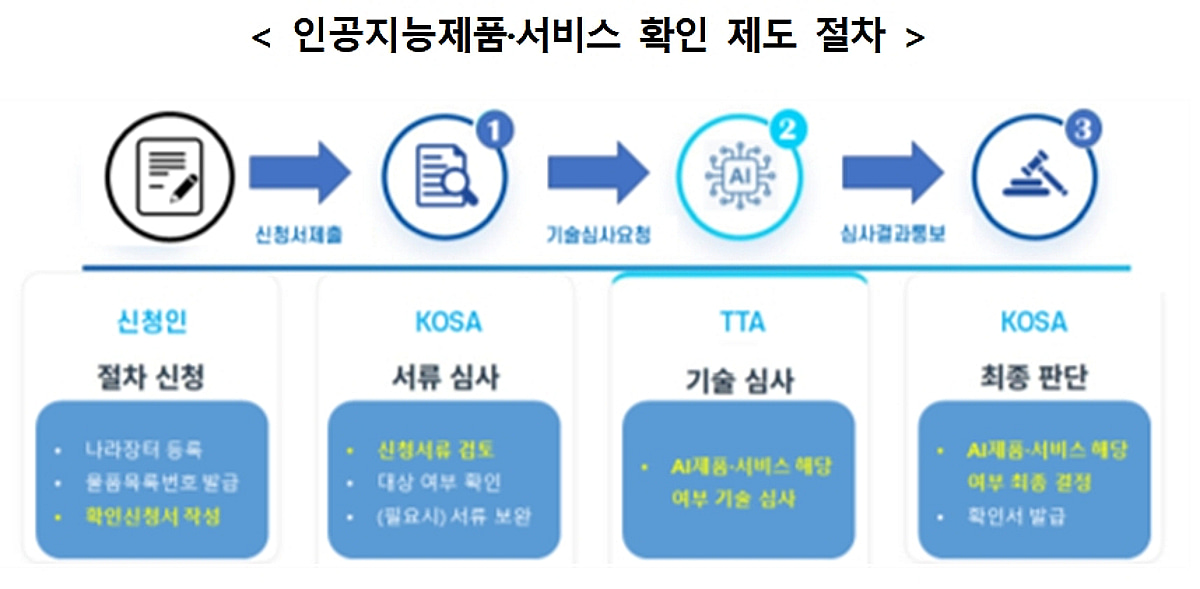
Yonhap reports that the amendment to the AI Framework Act enforcement decree passed the Cabinet on July 14 and will take effect on July 21. The report says an AI product and service confirmation system will be established, with public procurement directed to prioritize confirmation. The signal for suppliers to the public sector is that they need to prepare operational evidence and materials for the confirmation process alongside feature descriptions and price. The applicability and specific obligations of each project must be checked against its notice and official guidance. This article is not legal advice.
 Source · Yonhap[AI픽] AI기본법 시행령 국무회의 통과…공공 AI조달 본격화 | 연합뉴스The report covers the July 14 Cabinet passage, July 21 effective date, AI product-and-service confirmation system, and confirmation-first direction in public procurement.
A confirmation system is not finished by adding another product label. Procurement staff need to know what they must confirm, suppliers need to locate the documents and technical explanations they must submit, and adopting departments need to know which operational changes require renewed review. Generative AI features can change across models, data, connected tools, and deployment environments. If the real operating configuration no longer matches the proposal description, the confirmation material needs to follow reality.
MoneyToday covers eligible groups and support measures in the amended decree, including AI-subscription support, education, and utilization support for people aged 65 and over and women with career interruptions. The report shows that the policy change connects public procurement with measures intended to widen access and practical capability. Program planners should consider not only the supply side of technology adoption but also the conditions in which actual users can understand and use a service.
 Source · MoneyToday65세 노인도, 경력보유여성도 AI 구독료 지원…'AI기본법 시행령' 개정안 의결 - 머니투데이The report covers AI subscription, education, and utilization support mentioned for older adults and women with career interruptions in the amended decree.
Practical preparation can begin by locating materials, rather than by guessing at legal text. First, describe the AI product or service, its users, operating environment, and external connections on one page. Second, manage the model, key data, tool integrations, and human-review points with their versions. Third, connect the confirmation and evidence items required in procurement documents to named owners and deadlines. Fourth, decide who assesses impact and updates the materials when a change occurs. This checklist does not replace legal judgment and must be adapted to official notices and relevant agency guidance.
A procurement direction that prioritizes confirmation also makes post-purchase operations more important. If a service that appeared suitable at contract time later uses different tools or data flows after an update, field operators need to see that change. Service descriptions, access authority, incident-response contacts, and user-facing guidance need to remain current. When procurement documents, the live interface, and operating records describe different realities, both trust and response speed weaken.
As support reaches a wider group of people, accessibility becomes part of service quality rather than an optional feature. A first-time user needs to understand the cost, required device, personal-data handling, and route to help. Someone receiving education or a subscription benefit needs clear instructions for both starting and stopping. This is not an interpretation of the reported support categories as eligibility for a particular program. It is a product-operations view on how a wider basis for use can become a real user experience.
Operator’s note
Today’s three issues look separate, but they share one question: when AI moves to a next step, who controls the connection, what does the user understand, and what can the operator demonstrate? For coding agents, the answer lies in the boundary around tools and secret material. For conversational search, it lies in sources, the scope of available functionality, and confirmation before an action. For public procurement, it lies in service descriptions, confirmation materials, and change management.
Bring only three lists to this week’s operating meeting. The first names an agent’s servers, tools, credentials, and write authority. The second separates information, recommendation, and external-action stages in a conversational product. The third names the product description, evidence materials, owner, and update time used in a public proposal. An item without an owner or a current explanation becomes a candidate for resolution before the next deployment or proposal.
Priority can be set by the number of irreversible points, not by the number of new features. Check tool connections that send data outside, next actions that involve cost or personal information, and procurement materials that are difficult to correct after submission first. Nothing needs to be automated or documented all at once. Even a small scope, however, needs purpose, authority, evidence, and change responsibility joined in one flow.
This brief separates reported facts from operating recommendations derived from them. It also separates a product’s current capabilities from an announced direction, and policy reporting from the conditions of an individual project. An operating practice that does not hide uncertainty creates more durable trust than merely connecting more tools.
Today’s conclusion
The July 15 signals show that AI operations become competitive not through the number of connections, but through the ability to explain and control them. Coding agents need scrutiny of tool calls, credentials, and MCP connections alongside generated code. NAVER AI Tab points toward conversational search that supports a next action, while announced direction must remain distinct from currently available functionality. The amended AI Framework Act enforcement decree, effective July 21, makes preparation for confirmation in public AI procurement a concrete operating task. Today, choose one agent connection, one conversational action flow, and one public-proposal document, then record their purpose, evidence, authority, and responsibility for change in the same place.
Sources
- GTT Korea — AI가 만든 코드 넘어 실행 행위까지 검증...개발 공급망 보안 강화 ↗
- Model Context Protocol — Architecture overview - Model Context Protocol ↗
- News1 — 네이버, 'AI탭' 사용자 1000만 돌파…\"검색 경험 확장\" ↗
- NAVER — 네이버, 대화형 검색 'AI탭' 정식 출시… 5,000만 사용자의 일상으로 ↗
- Yonhap — [AI픽] AI기본법 시행령 국무회의 통과…공공 AI조달 본격화 | 연합뉴스 ↗
- MoneyToday — 65세 노인도, 경력보유여성도 AI 구독료 지원…'AI기본법 시행령' 개정안 의결 - 머니투데이 ↗
Related posts
Read →Related tools