July 14 AI Operations Brief — Connect Public Data, Operate Existing Apps, Prove Every Action
Seoul’s public-data MCP, AWS desktop-app agents, and the case for agent action records reveal one operating boundary from data access to execution and audit.
DAILY NEWSLETTER · 2026-07-14 · PUBLIC-DATA MCP · DESKTOP AGENTS · ACTION RECORDS
July 14 AI Operations Brief — Connect Public Data, Operate Existing Apps, Prove Every Action
Today’s three signals define the operating boundary an AI agent needs before it can become part of real work. Seoul is opening its first MCP service to connect public data directly to AI. AWS has introduced an agent capability for working inside existing desktop applications without separate API development or application migration. As the execution surface expands, teams need action records that can expose wrong evidence and out-of-authority calls hidden behind an apparently normal response.
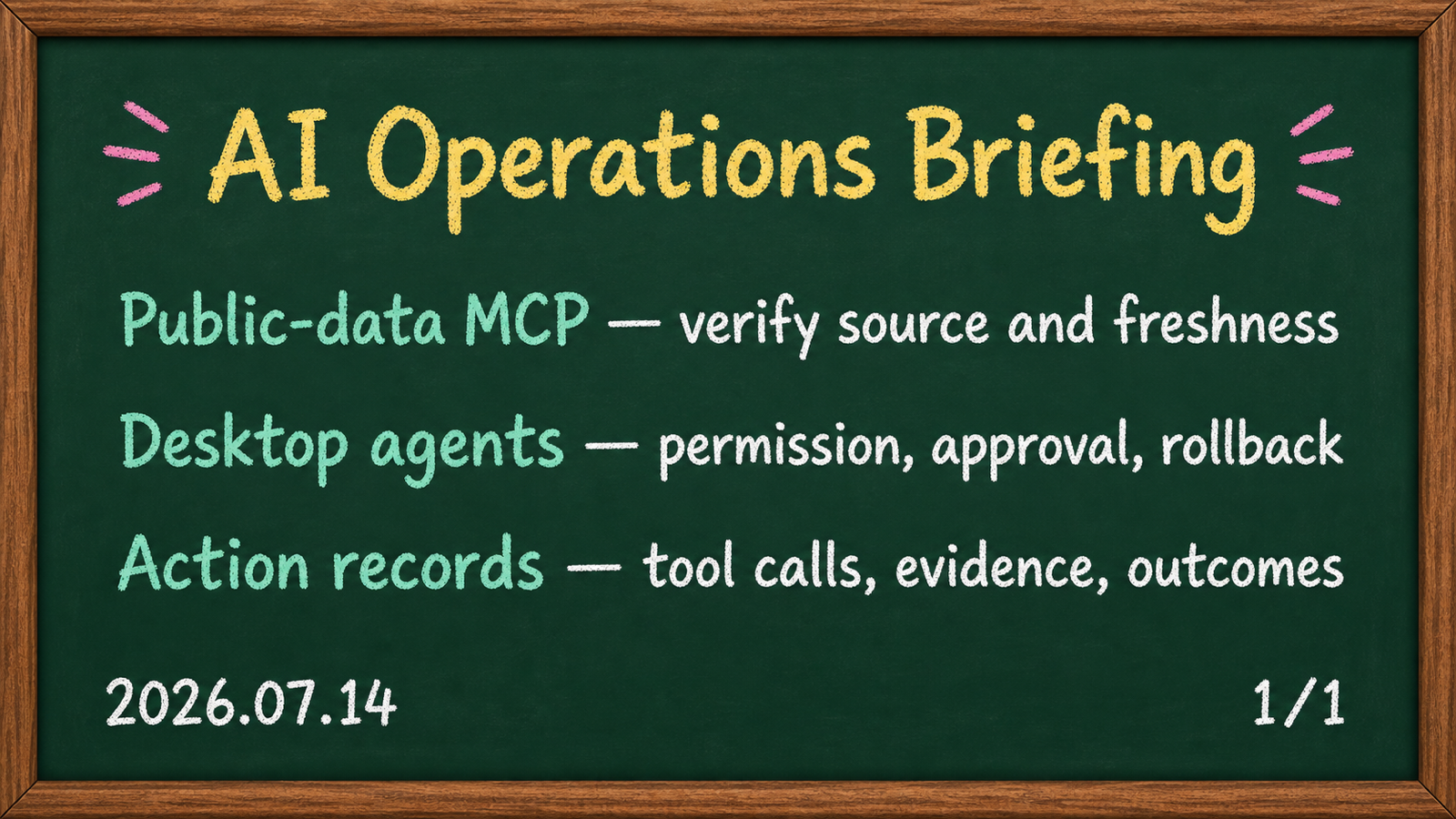
Today’s orientation: a wider execution surface requires higher-resolution evidence
Generative AI is moving beyond answering a question in prose. It can retrieve current data and operate software that organizations already use. That change cannot be explained by model capability alone. Automation becomes operable only when a team manages which data the agent can access, which screens and functions it can use, and what actually changed during the run. Today’s six sources make those three layers concrete.
- Seoul’s public-data MCP opens a direct path between AI responses and real-time city data.
- AWS’s workspace agent capability points toward desktop automation without new API development or application migration.
- Action records provide the minimum evidence needed to investigate errors and authority violations hidden inside normal-looking responses.
Read as one operating sequence, the stories are straightforward. A data connection needs provenance and time boundaries. Application execution needs limits on authority and side effects. An audit record needs to show whether both boundaries held during the actual run. Leave out any one layer and automation either remains a convenient demonstration or becomes a system that is difficult to explain when something goes wrong.
1. Seoul’s public-data MCP connects an AI answer directly to city data
CityTimes reports that Seoul is introducing its first MCP service connecting public data directly to AI. The application page for an authentication key opens at 11 a.m. on July 14. The schedule matters because the public-data connection is moving from a concept into an accessible service path. It does not, however, make every answer correct by default. A direct connection and a trustworthy conclusion are separate claims.
 Source · CityTimesAI 환각 줄인다…서울시, 공공데이터 첫 MCP 서비스The report covers Seoul’s direct public-data-to-AI MCP service and the authentication-key page opening at 11 a.m. on July 14.
MoneyToday reports that the pilot responses will use Seoul’s real-time data, including congestion, weather, and public transit. That creates an opportunity to distinguish an answer based only on general model knowledge from one reflecting the current state of the city. The important operating question is not merely whether MCP is attached. It is which Seoul data an answer used and when the system retrieved it. The same question may produce a different result when the retrieval time or underlying data state changes.
 Source · MoneyToday혼잡도·날씨·대중교통 실시간 제공…서울시, AI에 공공데이터 연결The report says Seoul’s pilot AI responses will use real-time data including congestion, weather, and public transit.
MCP can provide a structured route for a model to retrieve external data, but the route does not automatically guarantee the meaning of that data or the quality of the model’s interpretation. Operators should decide how an answer displays the dataset name, retrieval time, applicable area, and scope. A missing result and a failed tool call should remain visible as different conditions. Reusing an old value as if it were current, or adding a judgment the data does not support, would turn the advantage of a direct connection into unwarranted confidence.
Congestion, weather, and transit data each answer a different kind of question. A model can combine them in one sentence, but that sentence does not make a user’s final decision. A safer service separates retrieved facts, an AI-generated summary, and a recommendation that still requires judgment. This is an operating inference from the reported data scope, not an additional claim about Seoul’s pilot. The distinction lets a user see where sourced information ends and model interpretation begins.
Receiving an authentication key is therefore only the beginning. A team still needs to define which service may use the key, who can access it, and what happens when the data call fails. Even for read-only public data, preserving the source and time of a retrieval makes a wrong answer easier to revisit. If provenance is designed from the first connection, MCP becomes a trustworthy data boundary rather than one more feature on a tool list.
A four-part check is enough to start. Does the answer identify the dataset it used? Does it show a retrieval or update time in a form the user can understand? Does the system distinguish an empty dataset from a failed call? Does it separate raw fact from model interpretation? These are narrower goals than a promise to eliminate hallucination, but they are more directly useful when someone needs to verify a real response.
2. AWS’s desktop agents turn existing work screens into an automation surface
ZDNet Korea reports that the AWS capability lets AI agents use existing desktop applications without separate API development or application migration. Enterprises can keep the applications already embedded in their work while allowing an agent to approach the workflow through those applications. The premise that every system needs a new API wrapper or a migration before it can be automated becomes less rigid. At the same time, broader access through the user interface demands more precise limits on the accounts and functions granted to an agent.
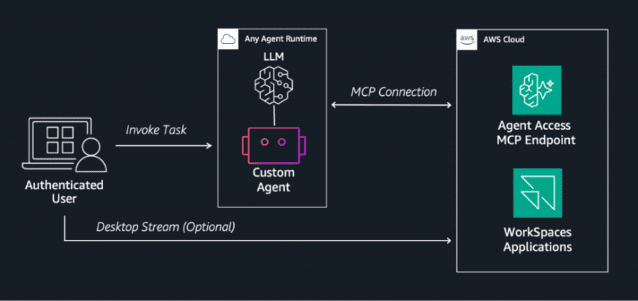 Source · ZDNet KoreaAWS, 데스크톱 앱도 AI 에이전트로 자동화…기업 AX 속도The report says agents can use existing desktop applications without separate API development or application migration.
CNET Korea reports that AWS launched the workspace AI agent capability on July 7. Through WorkSpaces Applications, agents can securely access and work in desktop applications. That puts established screen-based work within the potential execution environment of an agent. The product statement that access is secure is not the same as a conclusion that every enterprise workflow is safely operated. The latter depends on the specific applications, accounts, data, and actions an organization allows.
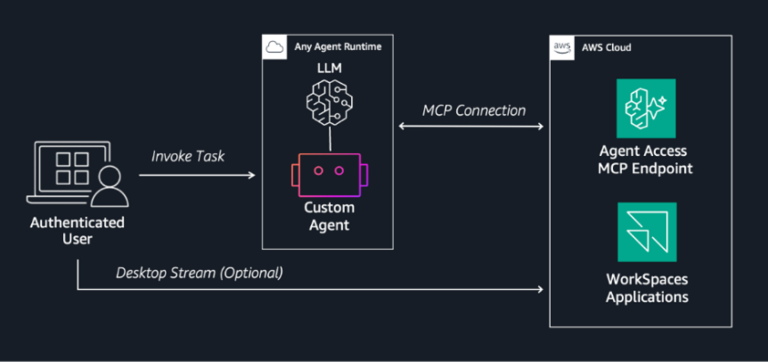 Source · CNET KoreaAWS, 데스크톱 앱 자동화 겨냥한 워크스페이스 AI 에이전트 기능 공개The report covers AWS’s July 7 launch of agents that access and work in desktop apps through WorkSpaces Applications.
An API usually presents a declared set of callable functions and input formats. Desktop automation can instead use the same visual path a person sees. That difference expands the set of older applications that may be automated, while also inheriting the side effects of clicking and typing. A read button and a save button do not carry the same risk. Neither do preparing a draft and sending it outside the organization. Operators therefore need allowed actions, not only an allowed-app list.
A sensible first deployment favors read and draft work whose results are easy to review and reverse. An agent might gather information displayed in an application or prepare input for a person to inspect, while submission, sending, deletion, or payment remains behind an approval point. This is an operating recommendation derived from the reported desktop-access capability, not an unreported AWS product feature. The point is to separate the technical ability to operate a screen from the organizational authority to cause an external change.
Session boundaries also matter. A team should know which account the agent uses, which files it opens or creates, and whether login state or temporary files remain after the task. It also needs a stop rule for a screen that differs from the expected path. Desktop automation should be evaluated not only by how quickly it completes the happy path, but by whether it stops safely when the visual state becomes unfamiliar.
The opportunity to retain existing applications may reduce migration pressure, but it does not validate every legacy permission model. Giving an agent a broadly shared human account can make responsibility less clear. Where possible, use a distinct agent identity with the minimum required permissions and let a person review the intended target and result before final execution. Completion count alone does not define automation quality; the ability to stop under the wrong conditions and recover from a change matters as well.
A compact assessment can list the target application, allowed screens, read and write access, external side effects, approver, stop condition, and recovery path. A team can use that list to reconsider work it previously excluded because no API existed. Automation feasibility and permission for unattended execution remain different decisions. The first is a technical capability. The second should depend on work risk and the evidence available after each run.
3. Action records expose errors and authority violations hidden behind healthy responses
IT Chosun points out that even a normal response can conceal a wrong answer, hallucination, use of the wrong source document, or an out-of-authority call. A running server and a sentence on the screen are not enough to establish that the work was handled correctly. The limit becomes more consequential when an agent combines public-data retrieval with desktop execution. Trust depends on which evidence the agent read, what authority it had, and what action it took—not only on the final wording.
 Source · IT Chosun알아서 일하는 AI 에이전트, ‘행동 기록’이 신뢰 좌우 [AI 운영②]The report highlights wrong answers, hallucinations, incorrect source documents, and out-of-authority calls hidden inside normal-looking responses.
WorkOS argues that existing application logging is necessary but insufficient for auditing AI agents. WorkOS is a vendor in this area, so the article should be read as vendor guidance rather than independent research. With that attribution in place, its operating concern still connects directly to the other sources. An agent may cross several data sources, tools, and permission boundaries in one request, making the final status code too narrow to explain the run.
 Vendor guidance · WorkOSWhy AI agent audit logs are different from application logsWorkOS argues from a vendor perspective that existing logging remains necessary but is not sufficient for agent audits.
An action record is not a requirement to preserve every trace of a model’s internal reasoning. It is a way to connect the external evidence needed to reconstruct a unit of work. A run can tie together requester and purpose, source data and retrieval time, tools used, applied authority, approval state, external changes, final result, and recovery status under one execution identifier. When an incident occurs, this structure lets an operator find the boundary that admitted a wrong input or action instead of assigning vague blame to the model.
Keeping every prompt and full source indefinitely is not automatically the answer. The record itself may contain sensitive data. When full content is not needed for review, a system can retain a source identifier, classification, retrieval time, and result reference as minimum evidence. Access to the record and its retention period should be as explicit as execution permissions. The useful objective is not maximum collection, but the ability of the right person to explain one run for the period in which that explanation is required.
An operating interface should distinguish outcome from behavior. The outcome view can show the generated artifact or completion state. The behavior view can put data sources, applications used, material changes, approvals, and stops on a timeline. A fluent answer built on the wrong source should still be flagged for review. An attempted out-of-authority call should record not only that the call failed, but which policy prevented it, so the team can improve the next design.
A small team can begin with actions that change external state. For desktop applications, record the target, executing identity, approver, result, and reversibility of save, send, delete, and submit actions. For public-data retrieval, attach the source and time. When both records share one work identifier, the team can answer a crucial question: which data led to this application action? That is where the first two stories become a real operating system rather than separate capabilities.
A healthy response is only one part of success. As the reporting shows, wrong answers, wrong evidence, and authority violations may remain hidden inside an apparently normal result. A stronger success criterion therefore asks whether the agent used the right evidence inside its approved scope, changed the intended external target, and left a reviewable record. A history of runs meeting that criterion gives a team evidence for expanding automation later.
Operator’s note
Today’s news fits into three boxes: data, action, and evidence. Seoul’s MCP opens the data an agent can consult. AWS expands the actions an agent can take through existing desktop applications. IT Chosun and WorkOS explain why operators need evidence to review that combination afterward. These should not become three unrelated projects. They belong in one definition of work.
This week, choose one automation candidate and write a one-page execution contract. On the first line, name the required data and retrieval time. On the second, separate the permitted desktop actions into read, draft, and change. On the third, place human approval points and the stop condition for an unexpected screen. On the last, define the execution ID, outcome link, changed target, and recovery state that must remain. If the page cannot explain the task before and after execution, its unattended scope is still too broad.
Three review questions cover the core. What data supported this result? Why did the agent have authority to take this action? What changed, and can it be reversed? The first tests the MCP connection, the second tests control over desktop automation, and the third tests the completeness of the action record. If answering them requires a manual search across unrelated systems, the links between records need attention first.
Greater autonomy does not arrive in one feature launch. It grows when a trustworthy data scope, minimum execution authority, and reconstructable evidence repeatedly hold together. An agent that says it does not know when a connection fails, stops when a screen is unexpected, and leaves an account of every material change will remain useful in real work longer than a more dramatic demonstration.
Today’s conclusion
The July 14 signals show AI agent operations shifting from model capability alone toward control over connection and execution. Seoul’s public-data MCP directly connects real-time city data to the evidence behind an answer. AWS’s workspace agent capability brings existing desktop applications into the automation surface. Action records provide the evidence needed to verify that both capabilities stayed inside the right source and authority boundaries. The practical move today is not to attach one more tool, but to give one automation a shared definition of data provenance, permitted actions, approval points, and recoverable evidence.
Sources
- CityTimes — AI 환각 줄인다…서울시, 공공데이터 첫 MCP 서비스 ↗
- MoneyToday — 혼잡도·날씨·대중교통 실시간 제공…서울시, AI에 공공데이터 연결 ↗
- ZDNet Korea — AWS, 데스크톱 앱도 AI 에이전트로 자동화…기업 AX 속도 ↗
- CNET Korea — AWS, 데스크톱 앱 자동화 겨냥한 워크스페이스 AI 에이전트 기능 공개 ↗
- IT Chosun — 알아서 일하는 AI 에이전트, ‘행동 기록’이 신뢰 좌우 [AI 운영②] ↗
- WorkOS — Why AI agent audit logs are different from application logs ↗
Related posts
Read →Related tools